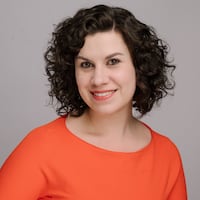
Allen is a food and farming justice activist who serves as Executive Director of the BIPOC Food and Farming Network (BFFN). She is also Co-Director of the U.S.D.A.-funded Project L.L.A.M.A. (Local Land and Market Access), which supports under-resourced urban farmers in Montgomery, Clark and Greene counties.
This spring, she adds another title to her résumé: published author.
Her book, “The Strain of Other Blood: The Life Story of the Rev. Mother Ruth from Harlem,” will be released June 4, 2026 through Eerdmans Publishing. The historical biography tells the story of Ruth Elaine Younger, a Black Protestant nun born in Harlem in 1897 — a woman whose life was marked by faith, racial complexity, and determination.
According to Evergreen College, “Food Justice is a structural view of the food system that treats nutritious food as a human right, and addresses structural barriers to that right.”
Food justice issues include ownership and control of land, the rights of farmworkers and food service laborers, and the environmental impacts of food production. The movement centers communities most impacted by lack of resources — particularly those who are Black, Indigenous, and People of Color (BIPOC) — and connects to broader efforts for social, racial and economic equality.
With the advance from her book, Allen returned to Dayton from New York in 2022 to be closer to home and community, and to become legal guardian to her brother, James, who lives in a group home.
Allen, 60, is a native Daytonian who began her food justice career as a farming apprentice for the same ministry founded by Mother Ruth in upstate New York.
Farmer’s hours
After journaling, Allen spends her early morning hours connecting with her literary agent at Folio Literary Management in New York City.
She meets virtually with her publisher to plan promotional events.
“My book is very complicated. It deals with racism, passing, colorism and the Episcopal Church. Mother Ruth was a very gifted and ahead-of-her-time educator.
“Teachers are very important in my life. I think they are incredible role models. I went through eighth grade in Dayton Public Schools and it’s still very warm in my heart. My mother was a Dayton Public School teacher. I really wanted to do something to give back. Now that the big book is done, I’ve turned my attention to developing a young reader’s version.”
How the book started
In 2018, following a career in higher ed, Allen was working as a farm apprentice at the upstate New York convent founded by Mother Ruth.
Nuns who were contemporaries of Mother Ruth, who died in 1986, shared stories about her, but Allen sensed there were gaps.

Credit: Contributed
Credit: Contributed
“I loved taking care of the goats and chickens and all that, but Mother Ruth’s story became like this white whale that I was obsessed with.”
The book zeroes in on Mother Ruth’s complex relationship to racial identity as she founded an Episcopal order for women and a private school in New York City that still exists today. She advocated for multicultural faith and learning communities, while at times passing as white in order to accomplish her goals.
“She was making real estate deals in the 1940s and ’50s that Black people weren’t able to do, even in Manhattan,” Allen said.
“People think that coming up north with the Great Migration solved a lot of problems, but in the early 20th century racism was still very much prevalent. In the case of Mother Ruth, she ended up having to go to Canada to live out her religious vocation.”
Becoming published
“For me it happened very quickly to get a literary agent,” Allen said. “I was working in Manhattan, and I had a lot of wonderful connections. One of them was author Rick Hamlin, a retired editor from Guideposts, who knew of this literary agent. From the time we sent my first chapter to the agency to when I signed contract was less than two months.”
She also credits writer Garrison Keillor, who was a member of the parish where she worked as communications director.
“He and I became lockdown penpals during COVID. I would seek him out for advice about my book.”
Things began to gel when Allen was matched with Sulay Hernandez, a Brooklyn-based editor who has ghostwritten and edited books by several celebrities.
“I was very lucky to get her. I really wanted to work with an editor who understood stories of people of color. Sulay grew up in Washington Heights; her parents were first generation from the Dominican Republic. I wanted somebody who had a feel for the struggle in New York.
“Writing a book with extensive research is hard. I traveled to archives from Canada to Austin. My Ohio State degree was in journalism, so I had a very objective voice. My agents and Sulay helped transform the book into a narrative that’s not a geeky story about a religious figure. It’s a story about America and a woman of color’s struggle in the backdrop of early 20th century harsh racism and poverty.”
She is delighted about having a Library of Congress number.
“I made it,” she said.
In her DNA
Allen’s 9-to-5 work takes place remotely or at Agraria Center for Regenerative Practice, a 138-acre educational and research farm in Yellow Springs.
Her interest in agriculture dates back to toddlerhood. At the old Elder-Beerman department store on Siebenthaler Avenue, while other children ran to the toy section, she gravitated toward hardware and riding mowers. Her favorite television show was Green Acres.
“My family started one of the early Black agriculture settlements in Champaign-Urbana, Illinois. An interest in farming was in my DNA,” she said.
When Wegerzyn Gardens first opened rental plots, her mother got her a junior plot.
“I was about 8. I could grow veggies to contribute to the household.”
Planning conferences, building networks
An example of Allen’s BFFN work is hosting Georgetown University students who came to Dayton to learn about Ohio’s urban farming scene. They toured local farms, West Dayton’s Edgemont Solar Garden — the incubator farm site for Central State — and the cooperative grocery Gem City Market.

Credit: Contributed
Credit: Contributed
As a statewide organization, BFFN is planning its annual local food conference in Cleveland.
“I have morning interactions with the project manager in Cleveland. Around 9:30, I start working with an intern from Antioch College who serves as a communications assistant with social media for BFFN. Last week we went to Central State Extension’s Urban and Small-scale Farm Connection Conference. I talked about Project L.L.A.M.A. and met with farmers.”
Allen also serves on the Montgomery County Food Equity Coalition as a member of the Thriving Farm subcommittee.
“We’re bringing together farmers, food producers and distributors, trying to strengthen our Miami Valley local food scene and keep food available in the area.”
BFFN will sponsor Afromeals Foundation, a food charity supporting immigrant communities, with a fundraiser dinner at MAZU featuring a vegan West African menu. She is working with chef Gabi Odebode, who also teaches classes at Dorothy Lane and Gem City Market.
Locally grown
At home, Allen grows food in containers and raised beds. She mixes spent mushroom blocks from Guided by Mushrooms into the soil.
“My strategy is to grow what’s most expensive, things like heritage tomatoes. This year I’m going to try to grow a lettuce called mâche.”
She lights up describing shiitake mushrooms cultivated in the shower of her guest bathroom.
Allen also speaks with enthusiasm about Dayton arts and dining.
“I love the music scene in Dayton. I love going to the Emporium and Underdog Cafe in Yellow Springs for their music events after work.
“And Dayton Contemporary Dance Company — I love attending their performances. When they used to come to New York to the Joyce Theater, I would get my friends together and we would go see them.”
While some writers romanticize cafés in Paris or Manhattan, Allen wrote much of her book at Wholly Grounds on Wayne Avenue.
“I love Amy Williams and her husband, Tony. They nurtured me with good teas and matcha.”
She frequents local restaurants including Morgan’s Café, Culture, Sueño and Soso Cuisine, a Rwandan family-run restaurant in West Carrollton. She participates in Ethnosh, a monthly dining club that supports immigrant restaurants, and shops at small West African markets like Kumasi Market.
“I love food from Ghana and Nigeria,” she said.
Most importantly, she spends time with her brother James, who has a seizure disorder and cancer.
“He was a major reason why I came back to Ohio. There’s nothing like your family and getting the support of your community.”
Allen is grounded again in the place where her story began.
“I’m proud to be a part of the Dayton community and glad to be home.”
About the Author