That “thorough and efficient” phrase was the standard the Ohio Supreme Court cited when it called Ohio’s method for funding public schools unconstitutional in the 1997 DeRolph case.
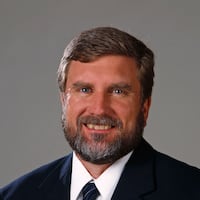
Readler is a Columbus attorney and charter school advocate who has argued education cases before the Ohio Supreme Court. His proposed language says, “The General Assembly shall provide for the organization, administration and control of the public school system …”
Readler believes the elimination of qualitative measures like thoroughness and efficiency will take education policy out of the courts’ hands, by removing the standard they would use to rule on cases.
“I think the language has been misused for that purpose, and gone way beyond the intent of Ohio’s framers in 1851,” Readler said. “They wanted a statewide system of public schools, but they didn’t intend for the courts to be deciding the amount of money spent on schools. They thought those are political issues best left to legislators and school boards.”
Charlie Wilson, emeritus professor of law at Ohio State University, disagreed, arguing that having those checks and balances between branches of government is exactly what was intended.
The debate is part of the Ohio Constitutional Modernization Commission — a 10-year effort by 32 appointed lawmakers, educators, business people and others to recommend changes to the state constitution. The Commission meets again today, and Readler hopes his committee can agree on education language this fall. Any change would require committee approval, then a two-thirds vote of the full commission, followed by approval from state legislators, and finally, ratification by Ohio’s voters.
Differing views
Commission member Bill Coley, a Republican state senator from Liberty Twp., has said he agrees with Readler’s idea of putting more power in the hands of elected legislators. While Readler says his intent is to empower the statehouse and school boards, some members of those groups disagree with his proposal.
Dozens of Ohio school boards have passed resolutions opposing Readler’s suggestion. Kettering was one of those, and board President George Bayless said removing the courts is like kicking away one leg of a three-legged stool.
“We feel, as most public education folks do, that this language is what keeps the courts in the game to make sure the legislature does provide for a thorough and efficient education,” Bayless said.
Northmont board President Linda Blum said her concern is that Readler’s language “doesn’t connect to students. … The word ‘thorough,’ in our belief, connects with high-quality education for students.”
State Sen. Peggy Lehner, R-Kettering, addressed both sides of the issue. She defended the importance of the courts, saying they should always ensure that laws her colleagues enact are Constitutional.
“I don’t think we should be doing something to diminish that role,” said Lehner, who is chair of the Senate Education Committee.
But she also agreed with Readler that the current “thorough and efficient” language may be too vague to be interpreted well.
“If language is put into the Constitution that gives clearer guidance to the courts on what they should be measuring the laws against, that’s a good thing,” Lehner said.
Wilson, the OSU professor, made such a proposal to the commission in June. His language would require the state legislature to “fund an efficient, safe, secure, thorough, equitable, and uniformly high-quality education through a system of free common schools throughout the state.”
More than 10 state constitutions require schools to be thorough, or efficient, or both. Wilson, who studied all 50 states, said he modeled his wording on Florida’s constitution.
Asked about the threat of litigation, Wilson said he doubted his language would lead to a flood of lawsuits, given the cost of that type of litigation. But Florida, with similar language, is currently five years into one constitutional lawsuit where a group challenged state school funding.
‘Thorough and efficient’
William Phillis, executive director of the Ohio Coalition for Equity and Adequacy in School Funding, has been one of the most vocal opponents of Readler’s proposal.
He said keeping the “thorough and efficient” language protects Ohio students’ educational opportunities. Asked whether the current language has done a good job of that, he pointed to increases in school funding after the DeRolph case and the creation of the Ohio School Facilities Commission. He said the system is not perfect, but added the analogy, “Just because not everybody drives 55, that doesn’t mean we should eliminate speed limits.”
Phillis said the constitutional language is also a political issue, because unlike regular law, it’s harder to change.
“The level of educational opportunity shouldn’t be determined by the whims of some political party,” Phillis said. “With gerrymandered districts, there are no checks and balances in the legislative branch today. We don’t have a balance there, even though Ohio is a pretty balanced state (politically). So we need language in the Constitution that gives judicial protection for our kids.”
Wilson and Readler both said it’s possible the commission won’t reach agreement on any new language, meaning the status quo would remain. Lehner said whether people agree or disagree with Readler’s proposal, having a thoughtful debate on the topic is a good thing. And Phillis urged caution, pointing out that any change could be the law of the land for the next 160 years, just like “thorough and efficient” has been.
About the Author