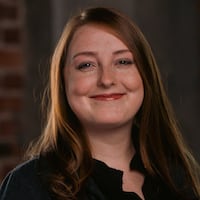

“English is actually my fourth language,” she said. She also speaks the native language of her past home (Kinyarwanda), as well as French, Swahili and a little bit of German.
But almost 15 years ago, she had to leave that life behind.
Immigration isn’t always a dream scenario, Bitwayiki said. She sought sanctuary in a community where she had no friends and few resources. For political reasons, it was not safe for her to stay in Rwanda.
“I believe there is a misunderstanding as to why people are here, and that makes me feel very bad,” she said. “Some of these wars that are ravaging our countries are not originating from our countries.”

The ‘90s were tumultuous for Rwandans, marked by a presidential assassination and a genocide that left more than one million people dead. Although a decade later the national focus shifted to economic development, with Rwanda being one of the fastest-growing African economies at the time, conflict continued to displace Rwandan citizens.
Cross Over Community Development, based on Hart Street in Dayton, is the product of Bitwayiki’s labor. Cross Over provides specialized English courses, some of which are tailored to specific career paths.
Bitwayiki said her first months in the U.S. were incredibly difficult, even with a proficiency in English.
When she arrived in 2009, few organizations in Dayton provided information and support to new Americans. Access to food assistance was restricted, and opportunities to build an income were nonexistent for individuals who were awaiting work authorization.
She said she felt eyes always watching her when she walked around town.
“Now this was the toughest life I’ve ever lived,” she said. “Everyone was skeptical of me. Nobody knew who I am.”

And some of those early days were downright terrible.
She recalls a hot summer day when nothing went right: she was trying to find a ride back to where she was staying and walked to another neighborhood to try to find a bus stop. But she missed her bus after walking to a nearby business to escape the heat. And all of this was happening while she was walking on a leg that had never properly healed from an injury she sustained before coming to America.
It was the kindness of a stranger, now a friend to Bitwayiki, that helped her that day. And it was the obstacles she overcame that inspired the support system she and those close to her created.
“I said, if somebody else was to face the challenges I faced, at least they should have a place they can be told to go to seek help,” she said.
Bitwayiki has been an interpreter for years, and connection is the core of her mission. Part of this comes from using her linguistics expertise to connect others to each other, to work opportunities and to the broader community.
Immigrants are looking for sustainable employment, and employers are looking for sustainable employees, Bitwayiki said. She’s met numerous immigrants who held esteemed jobs in their countries but were unable to find work within their expertise in the United States due to language and cultural barriers.
To Bitwayiki, this is a wasted resource.
“What inspired me the most is that when you have the right training and meet the need of the local employers, this is where you can best serve people,” she said.
About the Author